
ExRx and the Science of Weight Training for Women: Why Your Numbers Matter
Recent studies confirm what many have suspected: weight training is non-negotiable for women's health. But knowing you should lift and knowing how to program it are two different things. Understanding your numbers—starting with predicting a one-rep Max—is the key to a roadmap that actually works.
A 2026 review published in Annals of Medicine highlighted something striking: women who don't engage in strength training perceive significantly higher barriers to doing so compared to those who already lift . The gap isn't about ability—it's about perception. And those perceptions are shaped by decades of cultural bias that frames weightlifting as "unfeminine" or "too intense" for women.
But here's what the science actually says: women achieve similar relative strength gains to men from resistance training, despite lower absolute hypertrophic responses due to hormonal differences .
In other words, you won't "bulk up" overnight—but you will get stronger, denser bones, better metabolic health, and improved neuromuscular function-
A 2025 study from the University of Georgia added another layer: a single high-intensity weightlifting session improved mood and vigor in women while maintaining the integrity of the blood-brain interface—a protective mechanism that earlier exercise studies had questioned . Trained women also showed lower baseline inflammation than untrained women-
The message is clear: weight training is for everyone. But knowing you should lift and knowing how to program it effectively are two different conversations.
Why a Generic Plan Won't Get You There
Generic workout templates treat everyone the same. They don't account for your baseline strength, your recovery capacity, or your specific goals. And they certainly don't help you understand your numbers—the metrics that actually tell you if you're progressing or just going through the motions.
According to the latest ACSM resistance training guidelines (2026), the evidence no longer supports highly specific prescriptions like "6–12 RM" or elaborate rest interval recommendations . Instead, the emphasis has shifted toward individualization and adherence as top priorities .
The guidelines also removed recommendations for training to failure, noting no added benefit for strength, and clarified that load doesn't determine hypertrophy—meaning you can build muscle with loads ranging from 30-100% of your 1RM .
What does this mean for you? It means the "perfect" rep range or set number is less important than having a plan that fits your body, your schedule, and your preferences. But that doesn't mean anything goes. It means you need a framework—a roadmap—built on your data.
Predicting a One-rep Max: The First Step
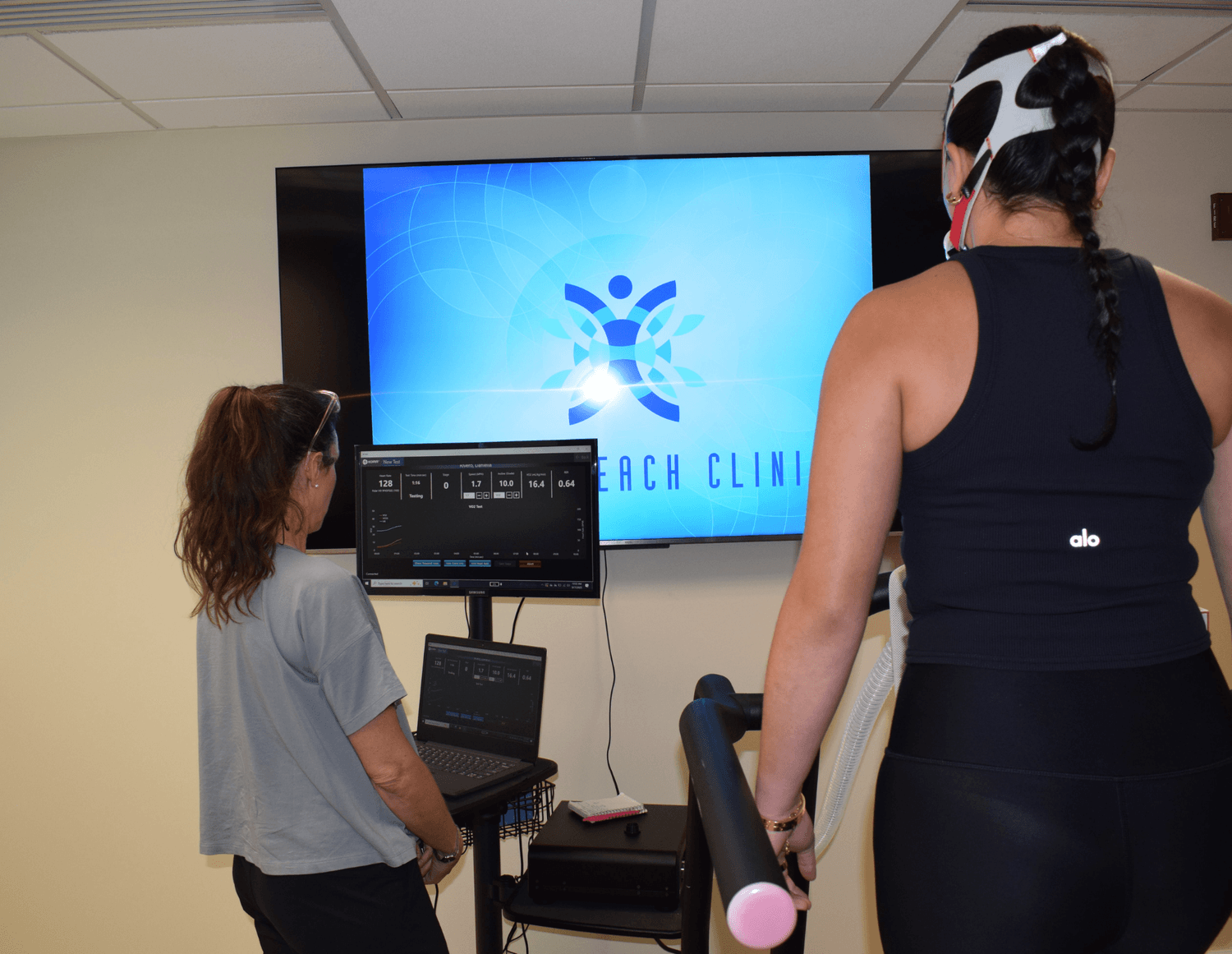
If you're serious about weight training, you need to know your starting point. That's where Predicting a One-rep Max comes in.
Your 1RM is the maximum weight you can lift for a single repetition of a given exercise with proper form. It's the gold standard for measuring strength and prescribing training intensity.
But you don't have to test it directly—which carries injury risk, especially for beginners.
Instead, you can estimate it using a submaximal test: perform as many reps as possible with a lighter weight, then plug the numbers into a validated equation.
Several established equations exist for this purpose, including the Brzycki, Baechle, Epley, and Landers formulas. A 2025 study cross-validated these equations and found that the Brzycki equation was the most accurate for estimating bench press 1RM in recreationally active men, with the smallest error margin .
A separate 2024 study introduced an RPE-based prediction model for novice lifters—using perceived exertion rather than reps-to-failure—and found it produced valid estimates without the fatigue associated with traditional testing.
Why does this matter? Because once you have an estimated 1RM for key lifts (bench press, squat, deadlift, overhead press, etc.), you can calculate training intensities as percentages of that number. That's how you structure a progressive program that challenges you appropriately without guesswork.
Why Your 1RM is Just the Beginning
Your estimated 1RM isn't the destination—it's the starting line. Here's what it enables:
Intensity prescription – Knowing exactly what percentage of your max to use for different training phases (e.g., 70-80% for hypertrophy, 85%+ for strength)
Progression tracking – Testing or estimating your 1RM periodically tells you if you're actually getting stronger
Injury prevention – Training with appropriate loads relative to your capacity reduces injury risk
Program individualization – Your numbers drive your program, not the other way around
The Missing Piece: Exercise Prescription
Knowing your 1RM is one thing. Knowing how to use it—and all the other metrics that matter—is another.
This is where an exercise prescription comes in. As a clinical, data-driven plan designed specifically for your body. Think of it like a medical prescription: your doctor gives you the exact drug, dose, and frequency based on your personal health data.
The validated 1RM estimation equations, the latest ACSM guidelines, and your physiological data all converge into a single, coherent plan.
Without an exercise prescription, your weight training program is a guess. With one, you know exactly why you're doing what you're doing—and you can trust the process because it's rooted in your biology, not someone else's template.
At My ExRx, located in Miami Beach, this is exactly what we do. We integrate validated 1RM estimation methods, objective physiological testing, and the latest clinical guidelines into a personalized exercise prescription.
So, What's Your Training Roadmap?
The evidence is undeniable: weight training is essential—especially for women. The latest research confirms its benefits for bone density, mood, inflammation, and metabolic health . But knowing the science is one thing. Applying it to your body is another.
Generic plans can't deliver sustained results because they don't account for your unique physiology. Understanding your numbers—starting with Predicting a One-rep Max—is the first step. Translating those numbers into a structured, individualized exercise prescription is the next.
Did you like this article? Spread the word!


Learn all about
My ExRx Exercise Prescription!
Every test, every biomarker, and every benefit so you know exactly what to expect.
Download Your Free Exercise Prescription Planning Kit
Featuring an estimated intensity guide, a science-backed Habit Loop Tool, a weekly progress tracker, and more.
Your smart starting point before a personalized ExRx evaluation.
Download Your Free Exercise Prescription Planning Kit
Featuring an estimated intensity guide, a science-backed Habit Loop Tool, a weekly progress tracker, and more.
Your smart starting point before a personalized ExRx evaluation.
Exercise Prescription in Miami Beach, FL. Smart Exercise explores VO₂ max, nutrition, longevity, and more.

